
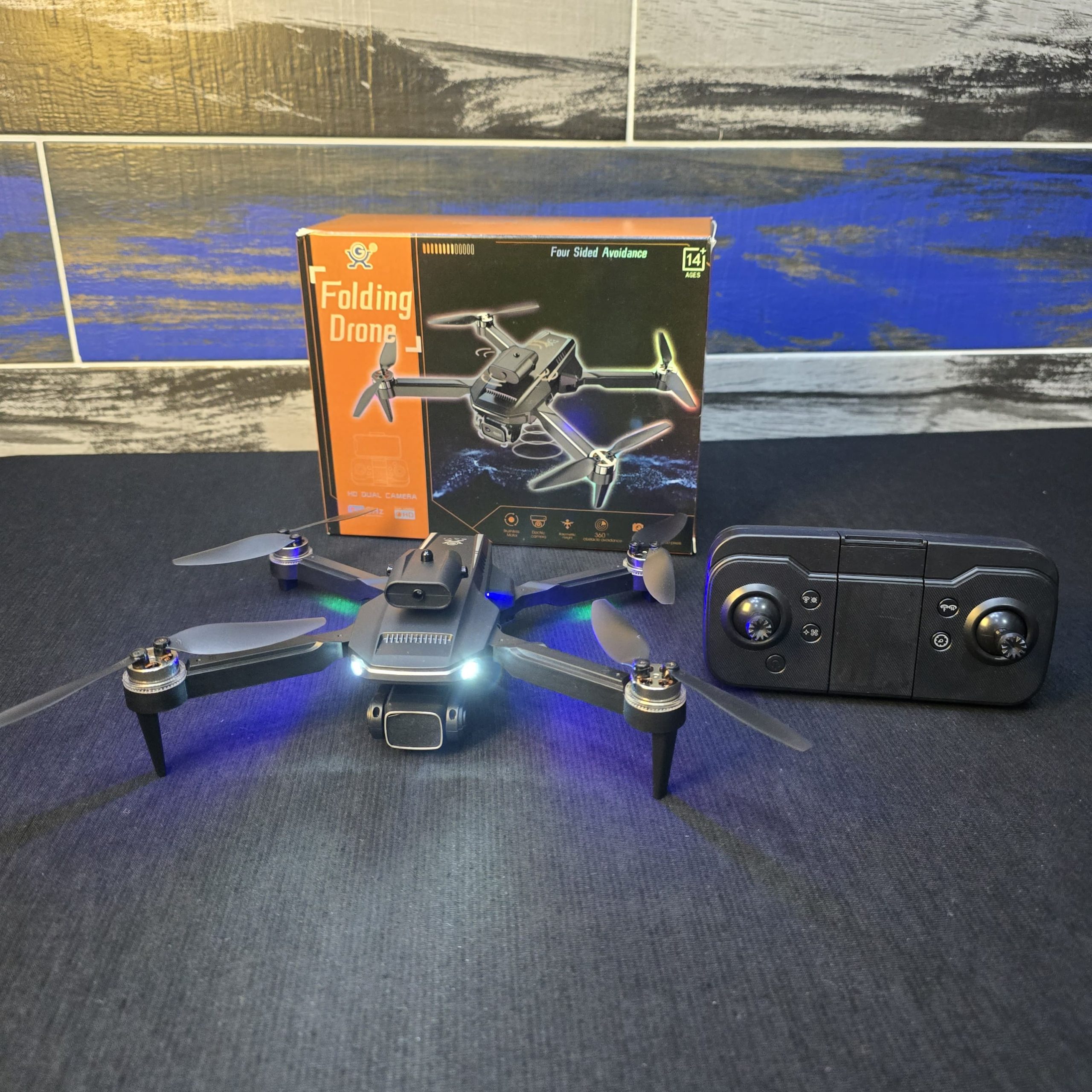
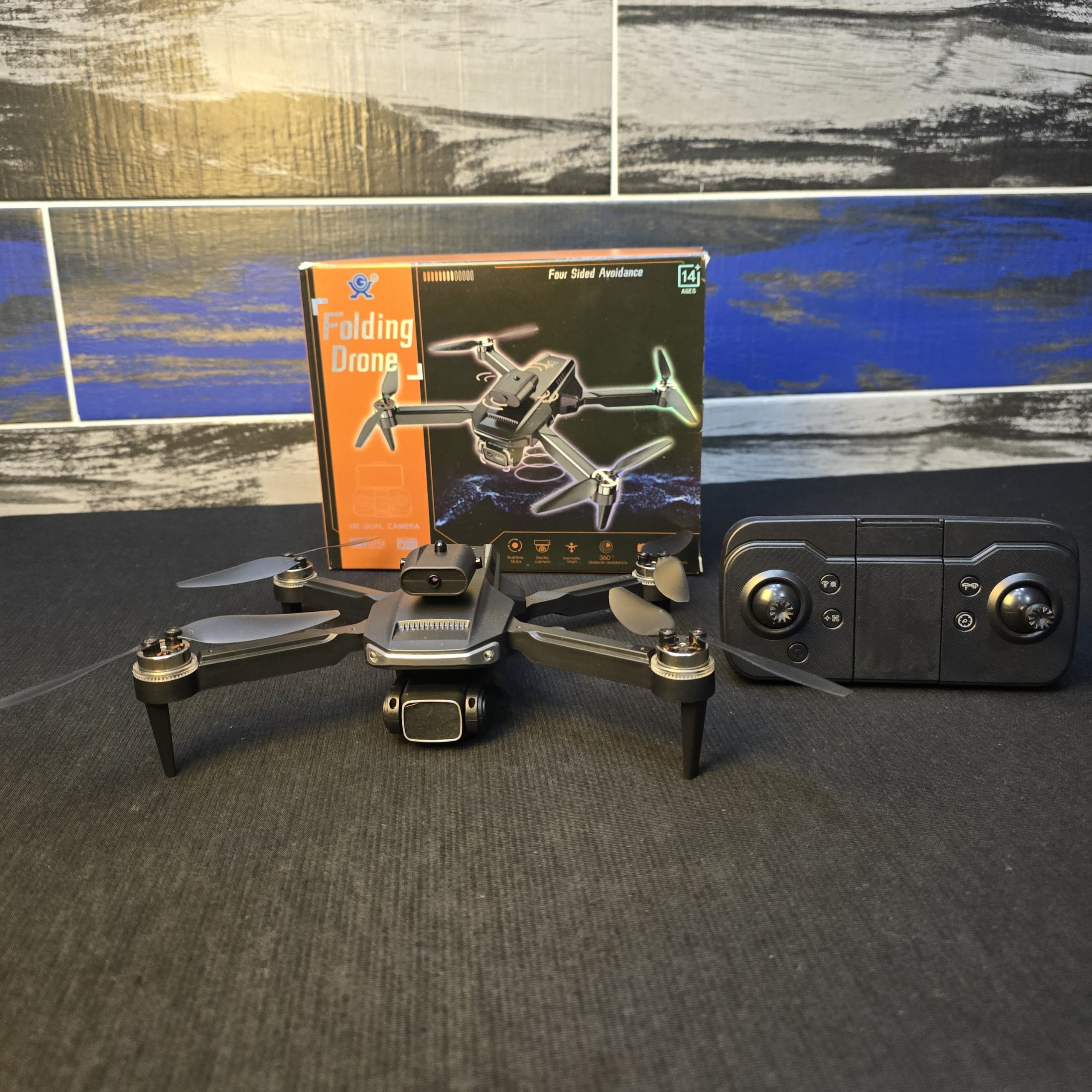
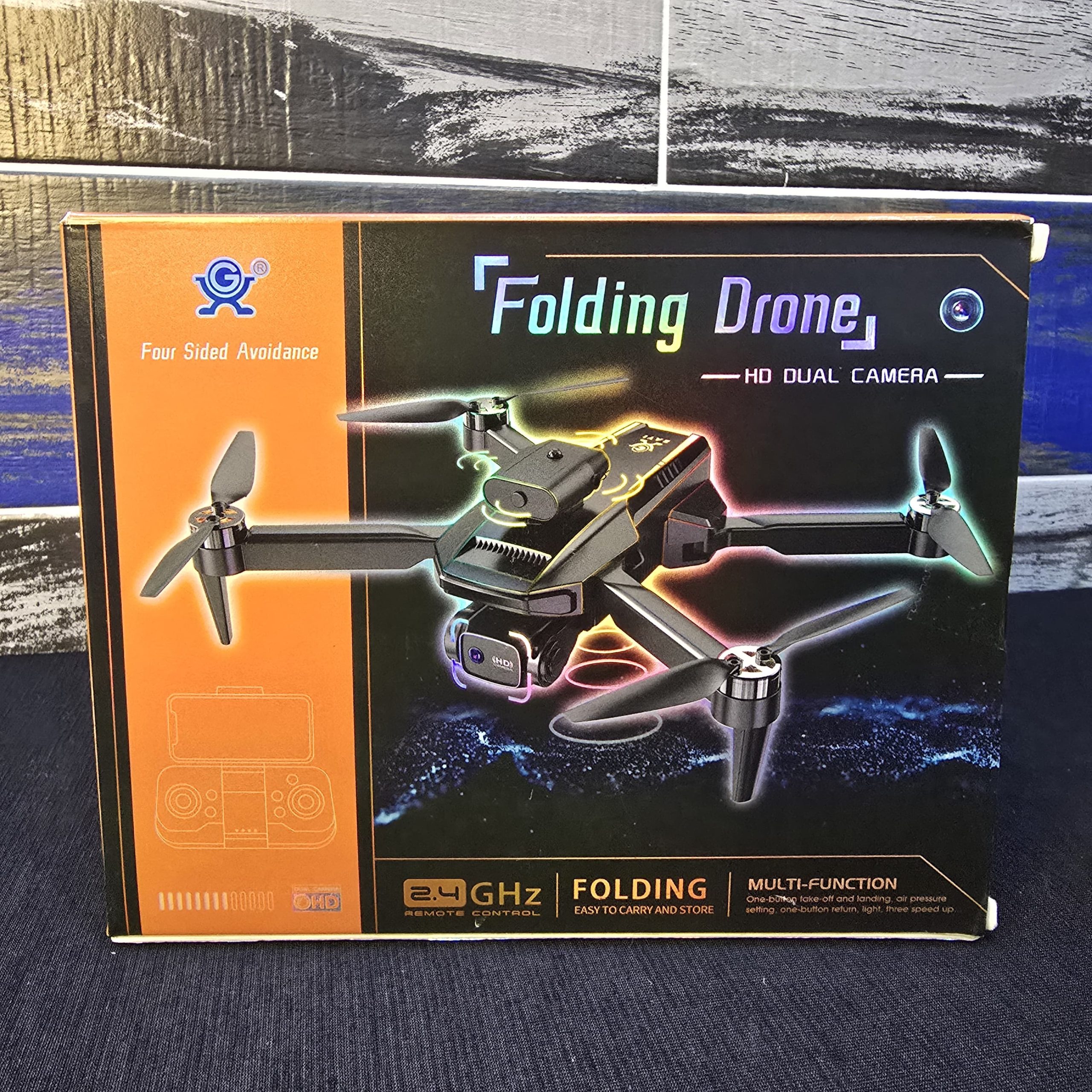
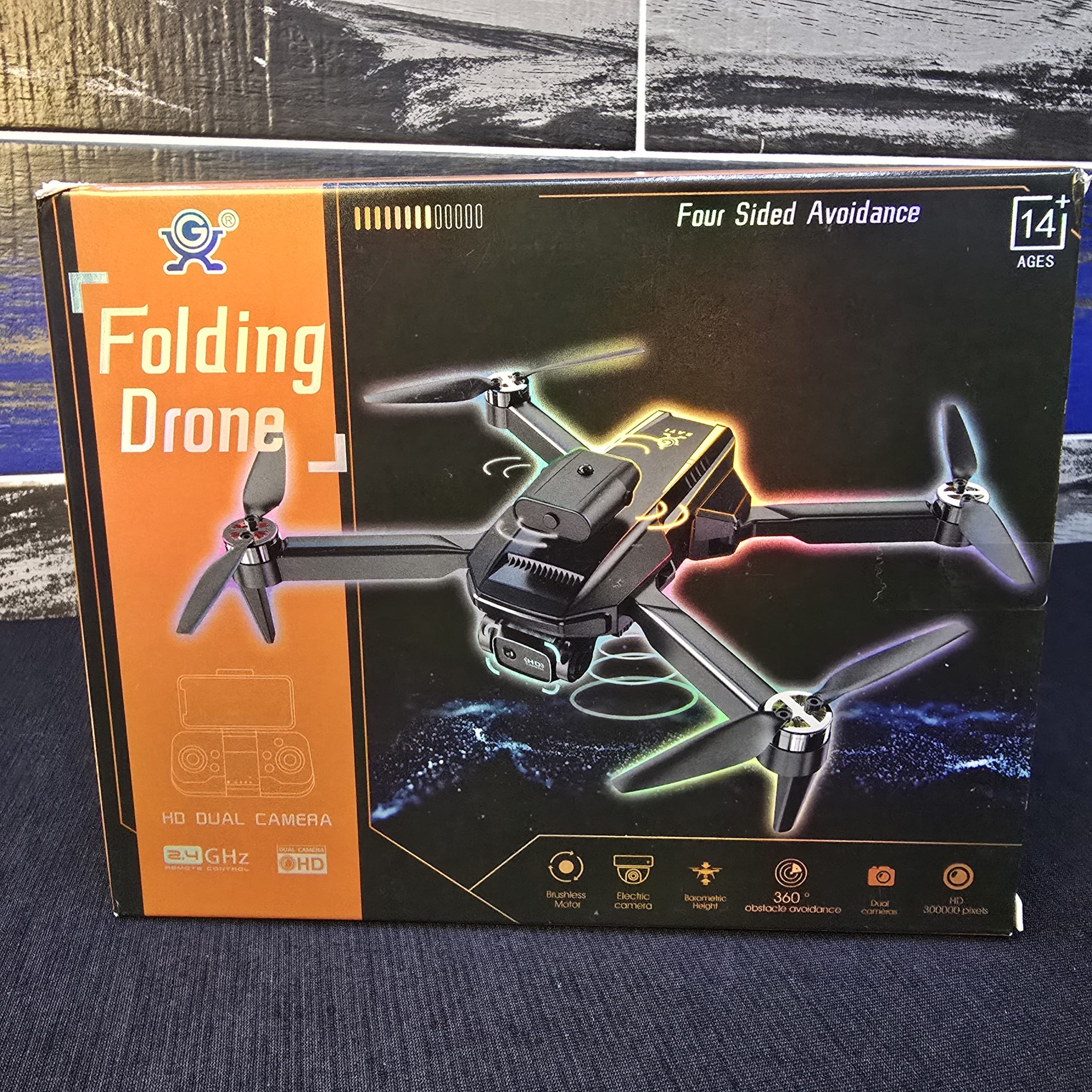
folding quadcopter.
Original price was: ₨ 7,500.₨ 6,000Current price is: ₨ 6,000.
Description
🛠️ Hardware & Design Specifications
Even without the “eyes” in the sky, the mechanical foundation of this drone remains the same:
-
Folding Airframe: The arms fold inward toward the fuselage, making it highly portable. This design is great for beginners as the hinges often provide a bit of “give” during minor crashes, potentially saving the frame from snapping.
-
Brushed Motors: These drones typically use coreless brushed motors. They are lightweight and inexpensive but have a finite lifespan (usually 10–20 hours of flight time). Ensure the propellers are free of hair or carpet fibers to prevent motor burnout.
-
2.4 GHz Transmission: The remote uses a standard 2.4 GHz signal. Without a camera, you won’t have a Wi-Fi video feed (FPV), which actually improves your battery life and reduces signal interference between the controller and the drone.
-
Four-Sided Obstacle Avoidance: The box mentions “Four Sided Avoidance.” This usually refers to infrared (IR) sensors on the top or sides. Note that these often struggle in bright sunlight or against glass/black surfaces.
🎮 Flight Capabilities (Multi-Function)
Since you won’t be distracted by framing photos, you can focus entirely on mastering “Line of Sight” (LOS) flying. This drone likely includes the following flight-assist features:
| Feature | How it works |
| Air Pressure Altitude Hold | Uses a barometer to lock the drone’s height. If you let go of the sticks, it should hover at its current altitude. |
| One-Button Take-off/Landing | Great for beginners; the drone will automatically rise to about 1 meter or descend slowly to the ground. |
| Headless Mode | Regardless of which way the drone’s “nose” is pointing, pushing the stick forward moves it away from you. Essential for beginners who lose orientation. |
| 360° Flips | Usually triggered by a shoulder button on the remote, allowing the drone to perform acrobatic rolls. |
| Three Speed Modes | Typically Low (30%), Medium (60%), and High (100%). Start on Low to learn the sensitivity of the sticks. |
💡 Practical Advice for the “No Camera” Version
-
Extended Flight Time: Without the power draw of a Wi-Fi camera module and the weight of the gimbal/lenses, you will likely get an extra 1–2 minutes of flight time compared to the camera version.
-
Focus on Orientation: Since you don’t have a video feed to see what the drone sees, keep it close. Use the LED lights (usually red for back, green/blue for front) to tell which way it is facing.
-
Weight Reduction: These drones are very light ($<250g$). Without the camera, they are even lighter, meaning they will be highly susceptible to wind. Only fly outdoors on very calm days (winds under 5 mph).
-
One-Button Return: Be careful with this. On generic drones, this is usually “One-Key Return,” which doesn’t use GPS. It simply flies backward relative to its starting orientation. If the drone has turned around, it might fly further away!
⚠️ Safety & Maintenance
-
Battery Care: These LiPo batteries should not be stored fully depleted. Charge them shortly after use, and never leave them charging unattended.
-
Propeller Guards: If the box included plastic guards, use them. As a “No Camera” pilot, you’ll likely be practicing maneuvers, and guards will save your motors during the inevitable bumps into walls.
Related products
-
Sale!

Kids Fun Projector Torch Cartoon Animal Fruit Educational
Original price was: ₨ 450.₨ 300Current price is: ₨ 300. Add to cart -
Sale!

20 Pack Hot Wheels Essentials Basic Cars Set – Kmart
Original price was: ₨ 4,500.₨ 3,500Current price is: ₨ 3,500. Add to cart -
Sale!

Spider-Man Color Kit 68PCs Set For kids
Original price was: ₨ 2,300.₨ 1,800Current price is: ₨ 1,800. Add to cart -
Sale!

Intelligence Kids Study Book for Kids – Interactive Learning & Educational Toy for kids
Original price was: ₨ 3,000.₨ 2,200Current price is: ₨ 2,200. Add to cart
Reviews
There are no reviews yet.